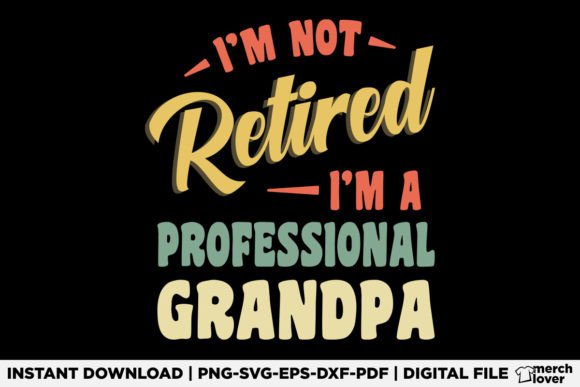
Evaluating the Funny Fathers Day Retired Grandpa Design
When I first opened the Funny Fathers Day Retired Grandpa design file, my immediate reaction was a smile. It has that warm, slightly cheeky personality that makes for a perfect gift. The composition is straightforward and clean, centered around a friendly message that feels celebratory rather than just humorous. This isn't a loud, gag-type graphic; it’s affectionate. That mood is its biggest strength. As a designer, I see this as a design that creates connection, which is exactly what you want for a personalized gift or a handmade product meant to evoke a feeling.
Where This Design Finds Its Perfect Home
This design naturally belongs on celebratory apparel and gifts. While the category is T-Shirt Designs, its application is much broader. I instinctively pictured it embroidered on a high-quality cotton sweatshirt—a cozy, enduring item a family member would actually wear and cherish. The scale and layout would also look excellent on the front of a canvas tote bag, making a great boutique product for a small shop, or on the corner of a premium kitchen towel as a Father’s Day gift.
For my craft business, I’m always thinking about products that have a clear “why” for purchase. This embroidery design has that. It’s ideal for a custom embroidered pillow cover for a grandpa’s reading nook, or subtly stitched onto a baby’s blanket as a gift from the grandparents. The theme is specific enough to be meaningful, yet universal enough that an Etsy seller could easily list it as a ready-made gift option for several occasions.
Navigating the Practical Stitching Terrain
In real embroidery project use, the design’s clarity is key. The lettering is the focal point. On a standard adult sweatshirt or t-shirt, using a mid-sized hoop, the satin stitches for the text should come out clean and readable. I would, however, advise caution on very small hoop sizes. Tiny, intricate lettering can lose definition if the stitch density is too high or the fabric is too textured. Always test it on a scrap of your intended fabric first.
For fabrics, I’d lean towards stable, medium-weight materials like cotton, polo-shirt pique, or canvas for a tote. Stretchy fabrics or very thin knits might require a heavier stabilizer to keep those filled areas smooth. On dark fabric backgrounds, the visual appeal hinges entirely on thread color contrast. A bright, crisp white or a pale cream would pop beautifully, but you must choose your colors deliberately. Before committing to a client’s project, I always run a test in both a light and dark fabric mockup to judge the final effect.
Scenarios Where You Might Proceed Carefully
While versatile, there are a few applications where I’d think twice. Embroidering this onto a curved surface like a cap requires careful digitization assessment; if the design file isn’t specifically adapted for curved templates, the text might distort. Also, on items that will undergo frequent washing—like a child’s garment or an everyday apron—you’ll want to ensure the stitch coverage is solid enough to withstand wear without fraying at the edges of the fill stitches.
Another professional note: for very small products, like a tiny patch or on the chest of a baby onesie, the detail level must be examined closely. If the design has very small decorative accents or tightly packed elements, they might blend together. It’s always worth inspecting the smallest details in your software preview at the actual size you plan to stitch.
The Impact on Your Business and Your Customer
Using a design like Funny Fathers Day Retired Grandpa in your craft business does more than just decorate a product. It adds a layer of emotional value. A customer isn’t just buying a sweatshirt; they’re buying a specifically crafted gift that conveys a message. This boosts the product value and enhances the handmade presentation. For an Etsy seller or small shop owner, offering such personalized products builds customer trust and engagement—they come back when they need another meaningful gift.
From a commercial embroidery perspective, it’s a reliable, crowd-pleasing digital embroidery file. It fits into holiday gift cycles seamlessly. For a creative entrepreneur, it can be a staple in your digital product library for creating printable mockups or as part of a curated collection of family-themed design assets.
Essential Designer Notes Before You Hoop Up
My final advice, as someone who stitches designs for clients daily, is to do your homework. First, confirm the licensing terms for this graphic. Can you use it for personal and commercial projects? Can you sell the finished products, like embroidered patches or custom apparel, freely? This is crucial for professional use.
Second, without specific details provided, you should verify the practical file aspects yourself. Check the compatible hoop sizes in your software. Look at the suggested thread colors list if one is included. Assess whether any areas use an applique design technique that requires additional fabric. And always, always stitch a sample. It’s the only way to truly see how the fill stitches and running stitches interact with your chosen fabric texture and to guarantee the final finished product looks as warm and welcoming as you—and your customer—expect it to.
When done thoughtfully, the Funny Fathers Day Retired Grandpa design translates from a digital graphic into a stitched piece that feels personal, professional, and perfectly giftable. It’s a design that works because it understands its purpose.